
Water
The most impactful element in trail design, usability, and maintenance is water. Water problems, left unchecked, can render a trail unusable and unmaintainable. Since water control is so important in trail health, it can be very useful to do an assessment during a rain event. What you should be looking for are signs that the trail is not draining properly. Are there clogged water bars? Are there berms on the trail edge blocking drainage? Is water running down the trail? Are there pools and/or muddy areas that hikers are avoiding? If assessing during dry weather, look for signs indicating water problems, like silt deposition, channeling or gullying, or areas where the treadway has been scoured down to rocks and pebbles. When you spot a problem, make sure you note the location by dropping a waypoint, marking on a map, etc. A photo can be useful in these cases.
Before & After Water Management
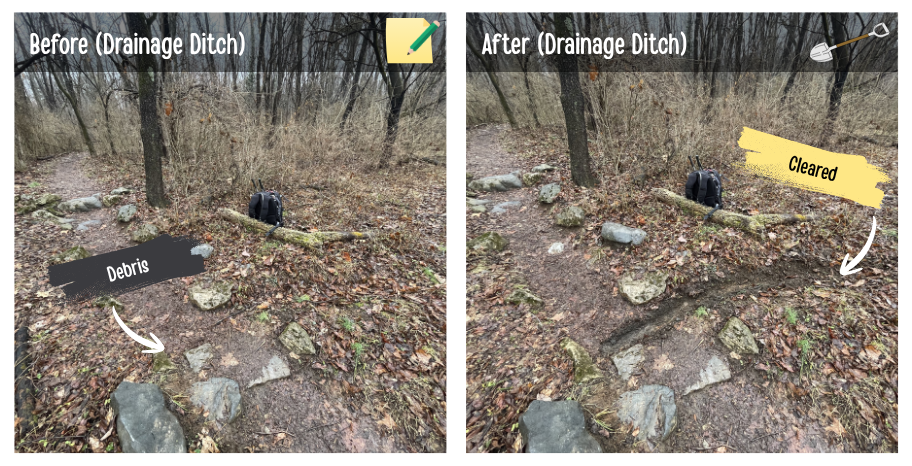
Drainage ditch, before and after maintenance.
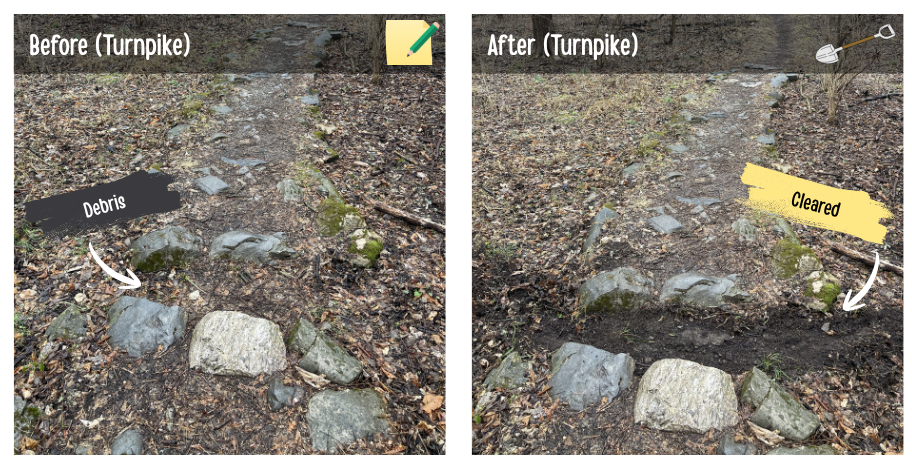
Turnpike, before and after maintenance.
Key Takeaways
- Water management is generally the most crucial need for trail sustainability
- Proactively clearing drains and outlets prevents larger water problems from developing
- If possible, assessing a trail during a rain event is a great way to observe how water interacts with the trail tread
- Cutting the berm on the downslope side of the trail helps the water to sheet off