
Written by: Bryce Kruger
My love of nature didn’t fully accumulate until I started hiking on trails. From that moment, I was hooked.
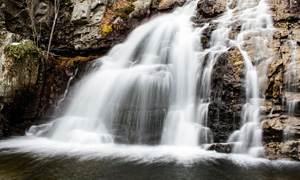
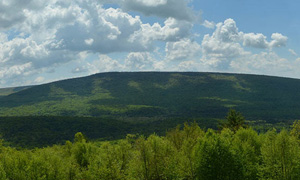
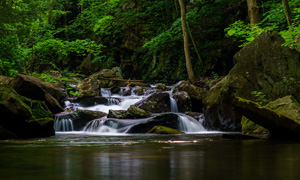
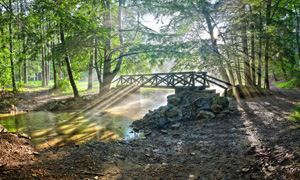
For me, it started in the foothills of the Shenandoah Mountains. Driving along the Blue Ridge Parkway, having no idea where I was, but finding security in trail head signs and waterfalls provided just enough white noise to push the rest of the world into the backdrop.
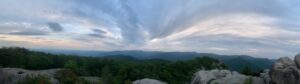
One of the many hikes in Shenandoah National Park that still inspires me to this day.
Hiking became the thing I did, whether it was across state lines into Virginia, up in New York, or here at home in Pennsylvania. If there was a trail to conquer, I signed my invitation with the heel of my boot.
The more time I spent on trails the more familiar I became with the nuances of their design. In the beginning, it was fighting my fear of unwelcome spiderwebs that attached themselves to my face – but beyond this, I developed an awareness of something remarkable – the trails were always open.
At first, I would notice clean cut logs and limbs on the side of the trail with the occasional symbol carved into them and wonder how they got there. Eventually, I realized that the stone steps I encountered five miles into a trail weren’t put there by nature. Someone was caring for these trails…
It had never occurred to me that the trails I was hiking didn’t naturally occur in the way that I was experiencing them. Someone was cutting back the vegetation that would otherwise crowd the trail corridor. Someone else had intentionally designed drainage structures to keep water off the trail tread and mud at a minimum. Others were clearing trees after they fell, keeping the trail passable. These people are stewards.
Once I saw this, it was impossible to unsee how stewards were showing up to enable my outdoor experience – and I wanted to contribute. But where to start? My first thought was the Appalachian Trail. I had noticed the occasional sign crediting local clubs for maintaining sections of the AT, and that’s when I found the Susquehanna Appalachian Trail Club.
I joined the group for a morning of trail maintenance on the AT just north of Harrisburg, which became my first experience with trail work and introduction to the standard tools of the trade. Making any changes to the trail felt taboo at first, but our guide helped the group understand that proper maintenance leads to trail sustainability. The four of us cleared 50 water bars that day, and I caught a bug for trail maintenance.
From there, I joined the Pennsylvania Outdoor Corps for a summer working with high school students on conservation projects in PA state parks. For one of those projects, we worked with the Friends of Pinchot State Park, who were our collaborating partner on building turtle platforms and trail maintenance. The Friends group had started an adopt-a-trail program where volunteers could take responsibility for maintaining a section of trail in the park – I immediately signed up.
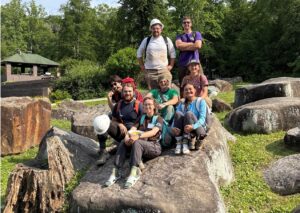
The crew I trained with, with the Pennsylvania Outdoor Corps. Affectionately known as ‘Delta Squad’.
The first visit to ‘my’ trail was as a hiker. I was curious to see how amazing it was and what cool piece of nature I could claim as being its’ protector. I was disappointed and underwhelmed – the trail felt like any other trail I had been on and certainly wasn’t making it on any of the “Top 10 Must-See” lists. It didn’t have any spectacular views, was covered in mud, and included an old maintenance road to a water tower.

Some of the muddy conditions on my trail during a relatively dry time.
My second visit was approached with a change of mindset. I brought along a pair of hand pruners and clipped low-hanging branches as I hiked. I took note of large branches on the trail tread and counted the standing pools of water that people were obviously walking around. I started to see where stewards before me had left their mark on downed trees and painted blazes to guide travelers and wondered what they saw.
It wasn’t the third visit that solved all the challenges I identified with the trail. Even after a year of maintenance, you may not see much of a difference. However, I’ve begun to reclaim the sustainability of this trail so that it might offer a better experience to those who visit the park in the future.
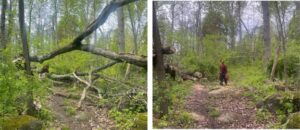
Before & after clearing a downed tree with a fellow friend of Pinchot State Park. We are both certified sawyers.
On my journey from hiker to steward, I’ve realized that a trail doesn’t have to be in the foothills of the Shenandoah mountains to be worth protecting and caring for. The stewardship of this trail will be an evergreen task – extending beyond my efforts and dependent on future hikers and enjoyers of nature that have also come to realize that we must care for the natural places we enjoy.
_________________________________________________
You too can be a steward here in Pennsylvania by signing up for our Stewards of Penn’s Woods Program that lets you volunteer on your own schedule. The Pennsylvania Parks and Forest Foundation also has over 45 friends group chapters across the state representing beacons of stewardship in our state parks and forests.

Bryce Kruger is PPFF’s Chapter and public engagement coordinator. Email Bryce to learn more about PPFF’s current friends groups and volunteer opportunities near you.